Ballet Glossary | Flat Shoes and Pointe Shoes
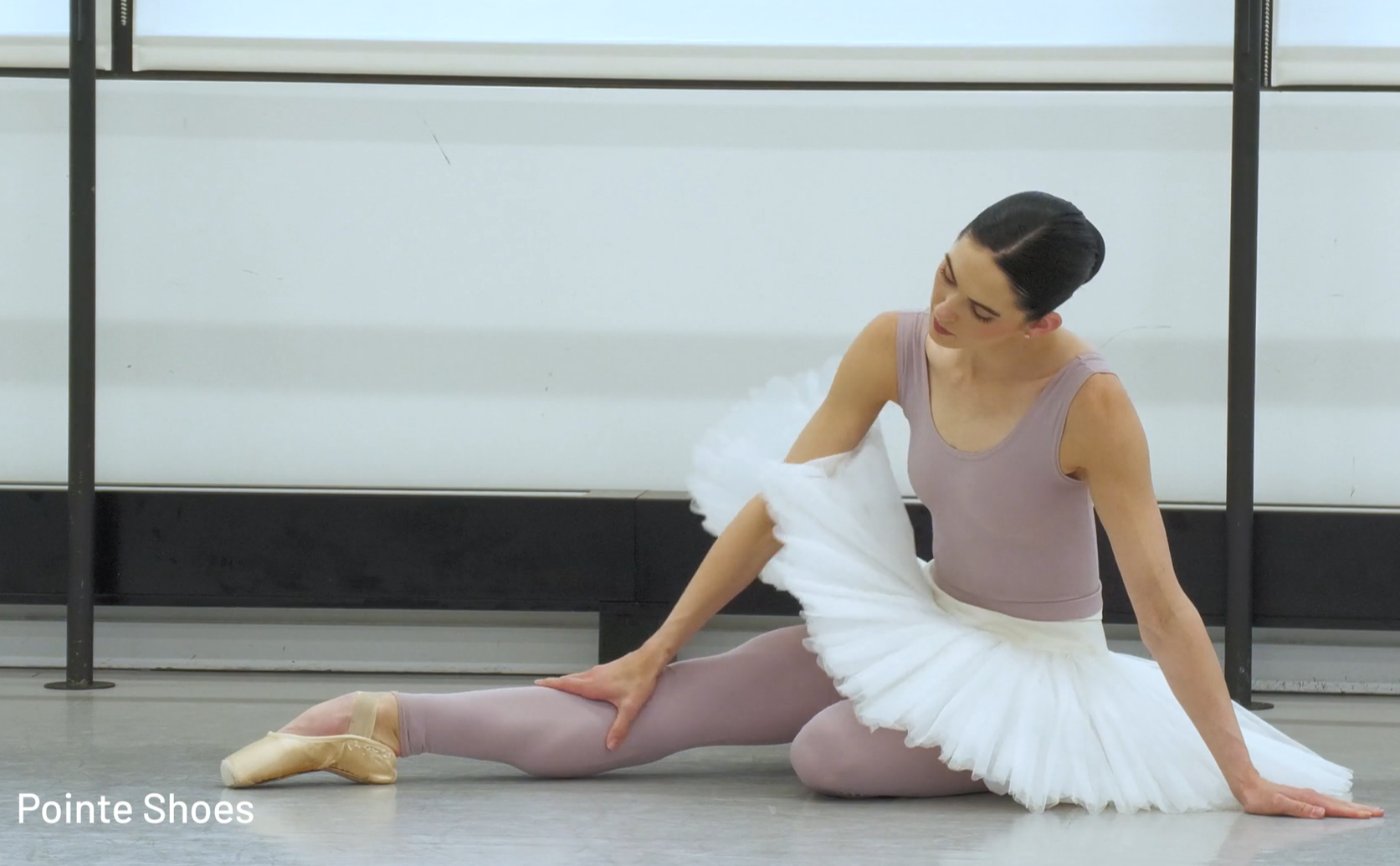
Ballet West is bringing back Ballet Glossary! Today we will be talking about the different types of shoes. What began as the first slipper worn by Paris Opéra Ballet dancer Marie Camargo in the 1730’s, evolved into an incredible tool designed to elevate and free dancers onstage. In modern ballet, there are two types of shoes dancers usually have handy in their dance bag.
Flat shoes, made of softer materials that are either canvas or leather. Dancers will also choose whether they will have a full sole or a split sole, depending on their need and preference. Full soles have one piece of leather running down the entire bottom of the shoe. This helps dancers gain additional foot strength, and most dancers start with these. Split soles have two individual pads, one for the heel and the other for the ball of the foot. These soles allow the dancers to also build strength when flexing their arch, since their foot will be pointed and flex more.
After mastering the flat shoes, dancers move on to pointe shoes! Pointe shoes make it possible for dancers to balance on the tips of their toes with the help of some pretty important structural components. The box is a hard tip on the front of the shoe that supports and protects your toes. It is made up of layers of dried and hardened glue and fabric. The shank is located under the arch and is a stiff piece of material in the inside of the sole. It provides dancers with assistance with their arch when en pointe. And lastly, a vamp is the length of the box that is on top of the foot. Every dancer is different, so the shorter vamps are great for shorter toes, and longer vamps for longer toes!
Make sure to check out our full Ballet West Glossary video featuring Former Principal Artist Beckanne Sisk
Photo featuring Former Principal Artist Beckanne Sisk