The Bridge to Ballet West
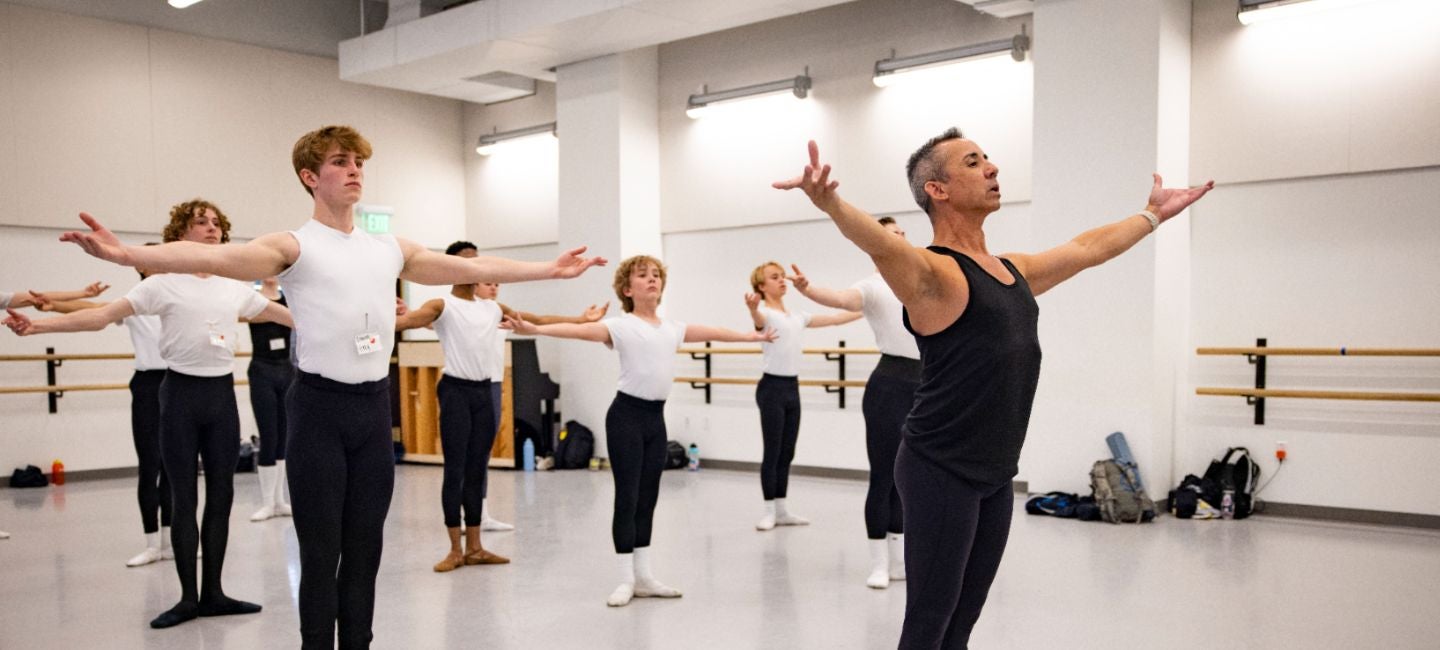
Calvin Kitten stands at the front of the studio watching as a dancer from Ballet West II works through a challenging combination. He’s seen this moment countless times before from the struggle, to determination, and then the slow building of confidence. Years from now, he knows this same dancer might take the stage as a principal artist with Ballet West’s main company.
During his nine years as Director of Ballet West II, Kitten has watched many dancers progress from Ballet West II into leading roles, including Principal Artists Amy Potter, David Huffmire,
and Jordan Veit.
“To see them go all the way up, that’s what makes me proud,” Kitten says, admitting he often cries watching dancers he trained perform.
The numbers show what Kitten sees in the studio every day: 90% of Ballet West’s main company dancers come from Ballet West II, and nearly 50% began their journey at the Frederick Quinney Lawson Ballet West Academy.
This remarkable pipeline didn’t happen by accident. It’s the result of Artistic Director Adam Sklute’s strategic vision and Kitten’s hands-on dedication in his dual role as Director of Ballet West II and Rehearsal Director for the main company.
A Strategic Decision
When Sklute arrived at Ballet West in 2007, only two dancers in the company were products of the Ballet West Academy. He had a vision for changing that. “I made a conscious decision that
we needed to start building dancers from the Academy,” Sklute has said.
“I worked closely with our Academy directors and faculty to discern our unique style and build principles of technique that could help all our students become ready, ideally for Ballet West.”
To execute this vision, Sklute needed someone who understood both the technical demands of professional ballet and how to develop young dancers’ potential. He found that person in Kitten, his former colleague from The Joffrey Ballet.
Kitten began his dance training at the California Ballet School in San Diego, continuing at the Tbilisi Republican of Georgia State Ballet School and the Joffrey Ballet School in New York. During his 19 years with the Joffrey Ballet, where he and Sklute danced together, Kitten performed principal and soloist roles while touring nationally and internationally. He received
two Ruth Page Awards, was featured on the cover of Dance Magazine, and has appeared in numerous films.
Building Professional Dancers
Kitten’s dual role creates unique continuity in dancer development. He first works with dancers in Ballet West II, building their technical foundation and professional work ethic. Then, as they transition into the main company, he continues guiding them through rehearsals.
“Dancing can be very mental,” he explains. “Day in and day out, you take class every day. You rehearse every day. You can get very down on yourself some days. I try to teach them to
be positive about what they’re doing, to come in with a good attitude, because it shows later in life.”
This philosophy extends beyond the studio. Kitten teaches dancers to be receptive to feedback, to adapt quickly to different choreographers’ visions, and to approach challenges with resilience.
Not every Ballet West II dancer will join the main company, and Kitten approaches this reality with both honesty and compassion. “With hard work, it may not be here. It might be a different company,” he acknowledges. “But they’re going to go out and dance if they really want to. I try to train whoever it is to be the best they can be.”
A Pipeline That Works
The partnership between Sklute’s strategic vision and Kitten’s hands-on expertise has transformed Ballet West’s approach to dancer development. What began as a conscious decision to build from within has become a proven system that consistently produces company-ready dancers.
“I like Adam’s vision. I like where he’s taking the company,” Kitten says. “I’ve seen such a change even before I got here, how he’s brought the level so far up. And it’s fun to see.”
For Ballet West’s supporters, the numbers tell the story: this investment in Ballet West II and the Academy creates a sustainable future, ensuring that nearly half of today’s company dancers were developed entirely within the Ballet West system and transforming promising young dancers into professional artists who will define Ballet West’s future.